Lean Implementation: 7 Steps for Lean Process Optimisation

Lean Implementation Guide: 7 Steps for Lean Process Optimisation

Many lean initiatives fail. According to a 2007 Industry Week study, nearly 70% of US plants used lean as an improvement methodology, but almost 13% reported no progress in achieving their objectives.

Companies buy the whiteboards, tape the floors, and train the lean champions, yet the workflow remains chaotic.

TIMWOODS: The Practical Guide to Identify and Reduce the 8 Wastes

TIMWOODS: The Practical Guide to Identify and Reduce the 8 Wastes

Waste is not abstract. It is the extra movement that tires your operators, the waiting that steals your throughput, and the excess inventory that ties up your cash.

Most factory managers feel these losses every day, but they often lack a shared language for naming them.

This is where TIMWOODS comes in.

TIMWOODS is an acronym that serves as a checklist for the 8 wastes of lean. It transforms vague feelings of inefficiency into specific targets for continuous improvement. If you cannot name the waste, you cannot kill it.

Introduction to Lean Concepts: The 5 Principles of Lean Management

Intro to Lean concepts

Inventory effectively acts as garbage.

This sounds harsh. Most accountants list inventory as an asset. It sits on the balance sheet as value. But in lean thinking, inventory acts as a barrier. It hides problems, covers up inefficiencies, and blocks the value stream.

The Smart Scaling Playbook: A Practical Guide to Data-Driven Assembly Growth

Manufacturers are under pressure to improve output and quality, yet many factories already possess massive untapped potential. Learn how to unlock it without investing in costly new machinery. The Smart Scaling Playbook is our practical guide that shows you how to reclaim up to 40% of hidden capacity with digital work instructions and real-time traceability. Discover how to cut training time, improve quality, and make data-driven decisions to scale smarter.

Assembling the Catalytic Converter: Methods, Challenges, and Solutions

Catalytic converter canning is a precise assembly process, in which stuffing is an important step. However, manufacturers frequently face hurdles like mat misalignment, shear issues, and tube inconsistencies, which can significantly compromise performance and longevity. Overcoming these challenges requires implementing accurate tooling, robust compression systems, and meticulous quality control. Adopting these best practices ensures product durability and compliance with stringent emission standards, making the canning stage critical for OEMs and their Tier 1 suppliers.

Inside the Catalytic Converter: Components and Materials That Make It Work

A catalytic converter is a marvel of engineering – controlling toxic exhaust gases and converting them into less harmful ones. Inside this crucial assembly, components like the honeycomb substrate, which is wrapped in and cushioned by the support mat, fit securely inside a robust stainless steel housing. Every element, from the brittle monolith to the sturdy housing and inlet cones, is precisely engineered. Understanding these intricate material choices is paramount to comprehending how your vehicle effectively reduces harmful emissions.

Catalytic Converters 101: What They Are, How They Work, and Why They Matter

Catalytic converters are the unsung heroes of your exhaust system, transforming up to 98% of harmful emissions into less toxic gases. These crucial devices use advanced redox reactions, powered by tiny amounts of precious metals like platinum, palladium, and rhodium, to protect our environment. They’re a testament to precision engineering and chemistry working together for a cleaner planet.

Harnessing AI in Manufacturing: Why Plant Managers Should Care

In today’s fast-paced industrial landscape, AI is revolutionizing manufacturing operations. Plant managers are leveraging its power to tackle complex challenges, moving from intuition to data-driven insights. AI-powered tools enhance efficiency, significantly reduce production costs, and minimize equipment downtime through predictive maintenance, which can cut breakdowns by up to 70%. Furthermore, AI boosts product quality and preserves vital institutional knowledge, ensuring consistency. Embrace AI to future-proof your plant, make more assured decisions, and unlock substantial savings. It’s not just a trend; it’s the smart, essential future of manufacturing for sustained competitive advantage.

The Role of Programmable Communications in Overcoming Industry 4.0 Challenges

Industry 4.0 promises transformative change, but many manufacturers face hurdles like outdated communications and rigid infrastructure. While cloud offers scalability, real-time industrial operations critically require local control. Programmable communications present a powerful solution, fostering a software-driven approach that merges cloud agility with on-site reliability. By leveraging hybrid cloud and edge computing, factories can achieve unparalleled flexibility, real-time automation, and secure remote access. This paradigm shift, moving beyond fixed connections, is essential for dynamic, adaptable operations, unlocking the true potential of modern manufacturing with intelligent, localized solutions.

How Atlantis Foundries Leveraged AI for Manufacturing Excellence
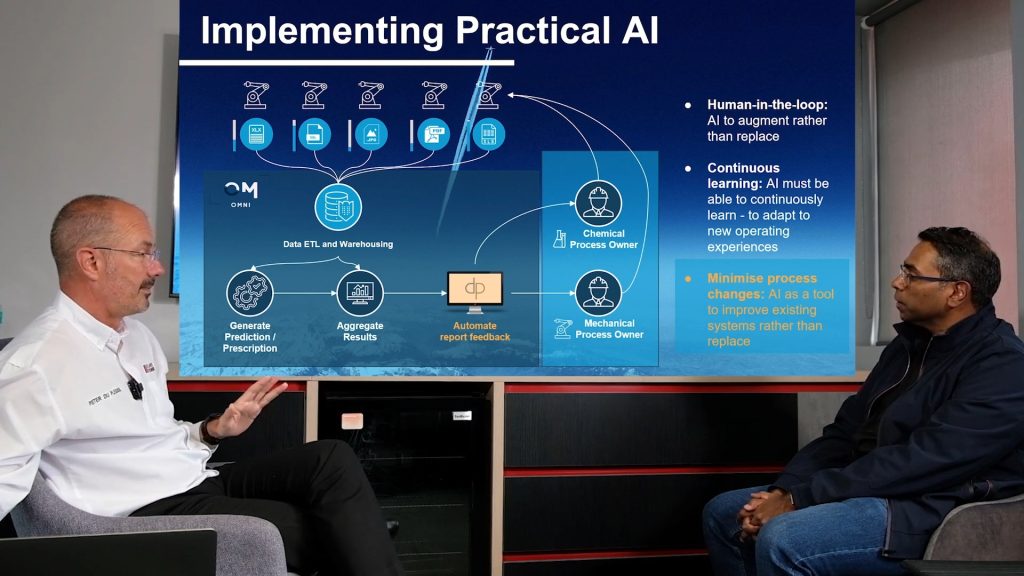
Atlantis Foundries is revolutionizing manufacturing by masterfully integrating AI-driven predictive analytics. Under CEO Peter du Plessis, they’ve built a robust AI-powered data model, standardizing data collection and creating a centralized hub. This foundation enables their advanced AI systems to actively monitor over 6,500 production processes simultaneously. The result is unparalleled predictive quality control, real-time anomaly detection, and prescriptive analytics. By embracing this forward-thinking approach, Atlantis Foundries has drastically reduced defects, elevated quality standards, and set a new benchmark for operational excellence, demonstrating that near-zero defect production is an achievable reality in smart manufacturing.