In this article, we explore the complicating factors and how to build a better digital foundation.
Assembly lines are more complex than they appear
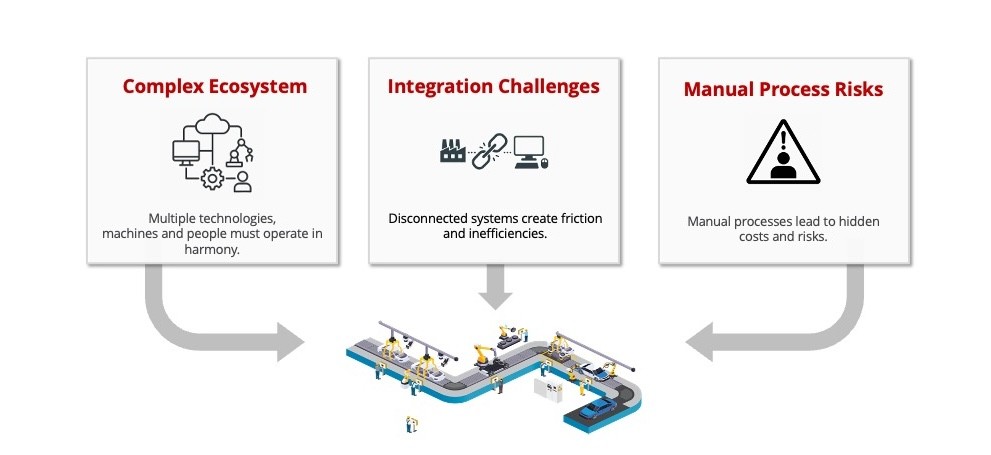
On the surface, a production line looks like a simple, linear process. But underneath, it’s a web of systems, people, and processes that must synchronise perfectly.
Here’s what’s really going on:
- Multiple station types: Manual, semi-automated, and robotic stations all require different control strategies and data integration.
- Conflicting objectives: Operators want clear instructions and managers want data visibility, while IT and logistics want security and live tracking respectively.
- Disconnected systems: The range of acronyms and abbreviations speaks volumes: SCADA, PLCs, ERP, MES, TCP/IP, Profibus, DeviceNet… the list goes on. And each function (whether it involves a tightening tool, conveyor, inspection camera, or barcode scanner, for example) is often delivered by a different vendor.
What this creates is a patchwork of systems with siloed data, rigid architectures, and limited flexibility.
The ‘golden roof on a shack’ problem
Too often, companies try to digitise by layering new IT systems onto legacy production lines. While it looks impressive from the top, the foundation is weak.
We’ve seen the telltale signs repeatedly:
- A fancy analytics dashboard that’s disconnected from real-time production data.
- AI projects that fail because the required context isn’t collected at source.
- ERP systems that tell you what was built — but not how well, by whom, or why it failed.

This creates what we call a “golden roof on a shack” – an expensive, top-heavy system that is stacked on a fragile base not designed to support it. While these sophisticated systems may look impressive, without structural integrity the entire operation collapses under pressure.
Lessons from building 3500+ assembly systems
Jendamark has built more than 3500 assembly systems for customers in over 35 countries — and through this we’ve learned that stability starts with the right architecture.
So instead of forcing disjointed systems to work together, we designed and developed ODIN Workstation, an operating system for the assembly line.
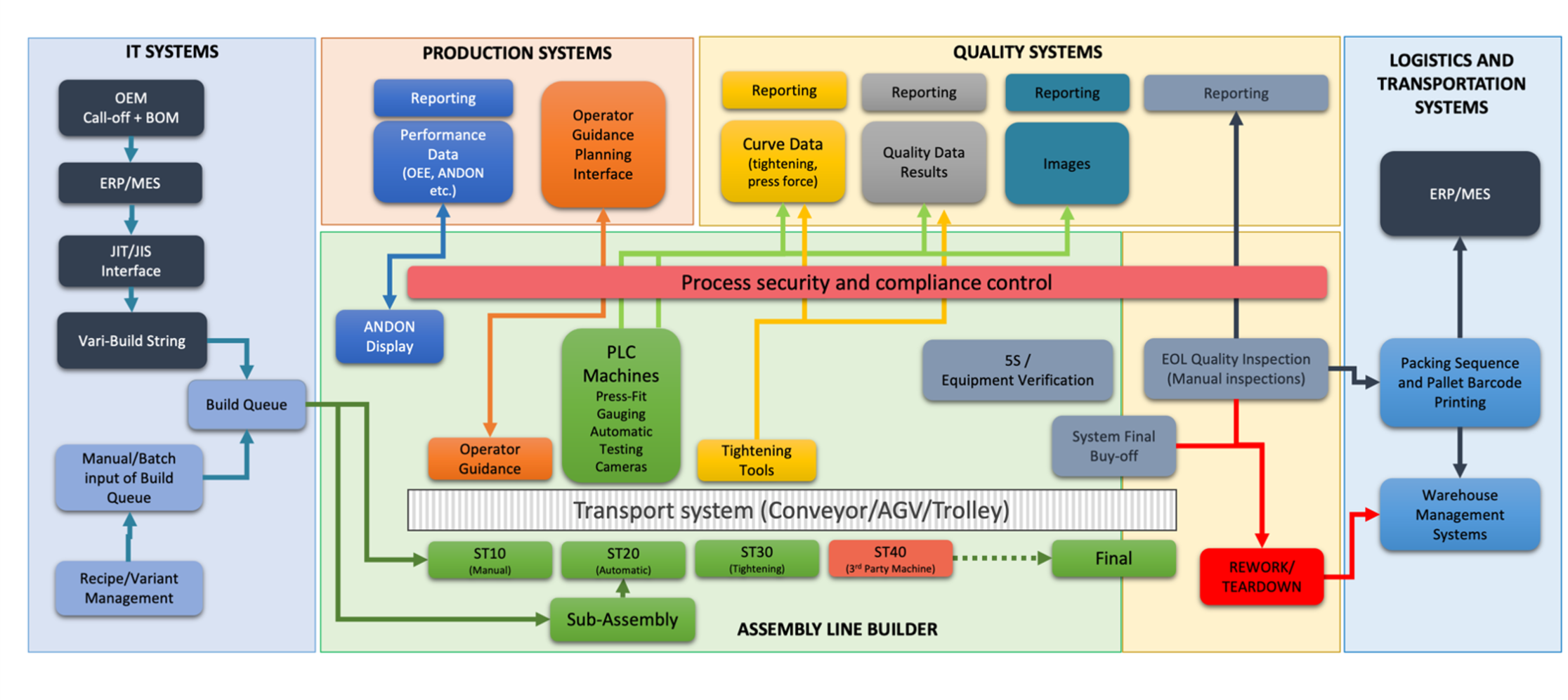
The diagram below illustrates the complexity of a standard production line, with its stacked and interconnected systems. Each colour represents a different vendor system or machine required for an assembly line to function.
What makes our approach different?
- It’s not just another MES: It’s a unified digital layer that integrates people, process, and machines.
- It’s built to handle complexity natively: For multi-variant, high-mix, flexible manufacturing.
- It provides a single source of truth: From sequencing and quality to rework and compliance.
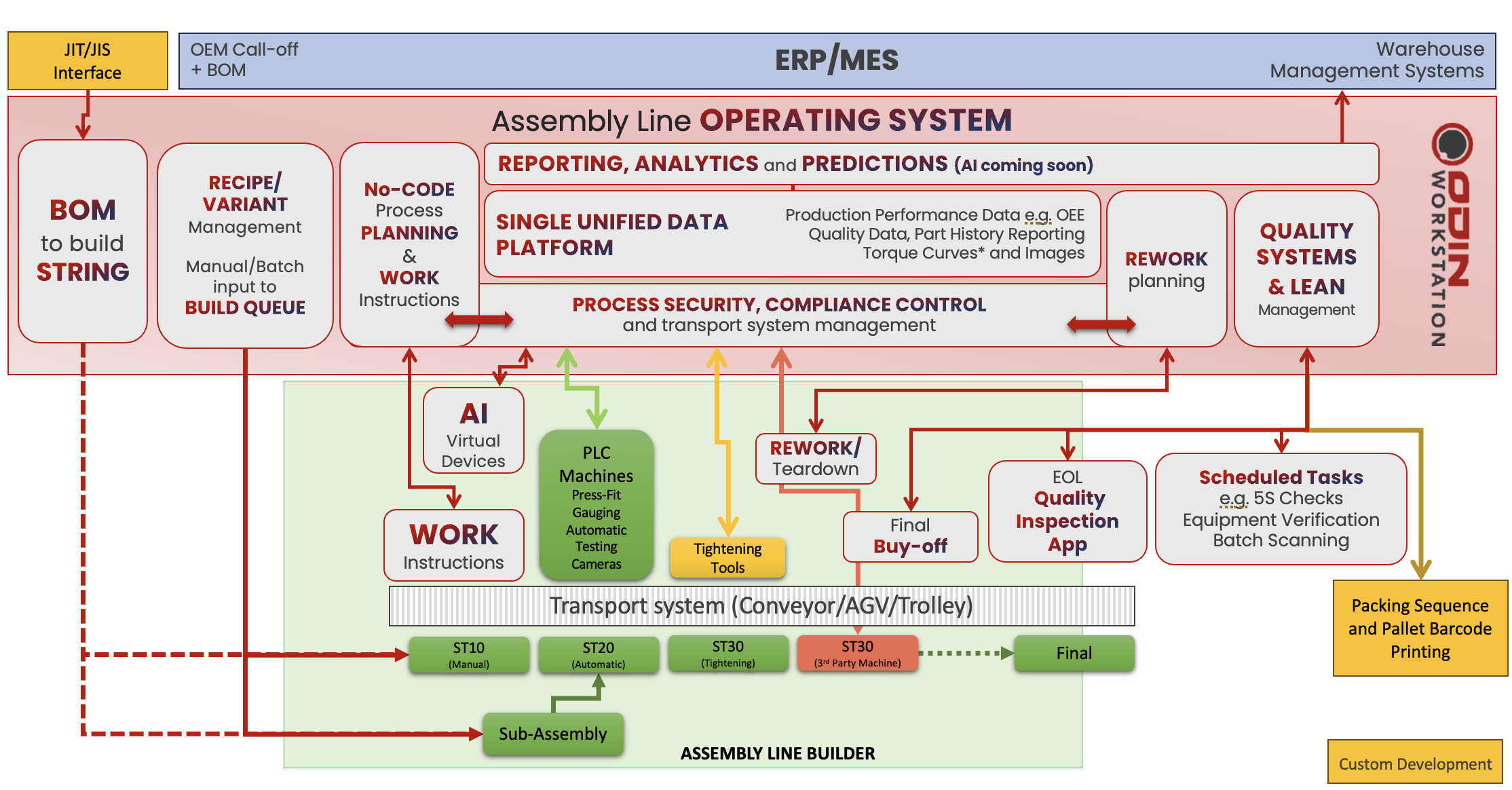
This revised diagram shows how we have re-imagined the production line as asingle modular system with a unified data platform that handles all the complexity with ease.
6 core functions with real-world value
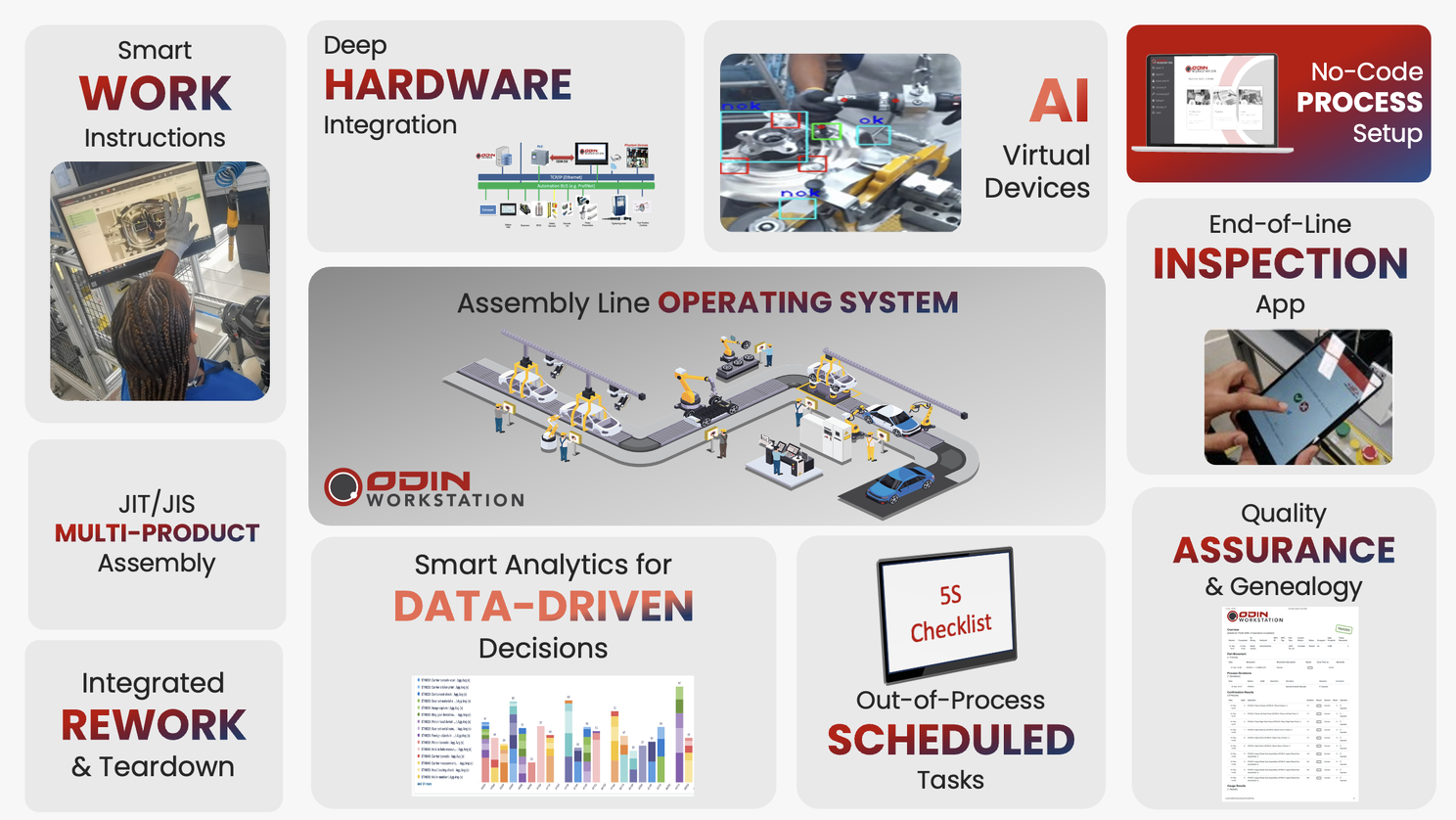
Whether you’re thinking about digitising your production line or changing from an MES that isn’t working for you, it’s important to consider the production-related challenges you face, and the core functionality required to optimise your operations. Let’s break down some of ODIN Workstation’s modules as a yardstick for choosing the right one for your shopfloor:
1. No-Code Process Planning and Smart Work Instructions
- Create and manage digital work instructions without writing code.
- Instructions are tied to compliance rules, eliminating separate systems.
- Engineers (not programmers) can easily configure process flow and control logic.
- Integrates with tools, sensors, cameras, and PLCs for step-by-step confirmation.
2. Rework and Teardown Planning
- Failure-mode-based rework flows are built in from the start — not added later.
- Reworked parts are reintegrated into the production flow with full validation.
- Scrap costs are reduced, and traceability is preserved.
3. Quality Assurance and Genealogy
- Every part gets a complete history: torque curves, press-fit data, images, operator steps.
- Final buy-off is automated — ensuring every operation is complete and compliant.
- End-of-line tablet app lets inspectors log results and photos directly to the part record.
4. Scheduling and Compliance Tasks
- Plan out-of-process tasks like 5S, equipment checks, and batch scanning.
- If tasks are skipped, ODIN can halt the line to ensure compliance and safety.
- Everything is tracked — improving audit readiness and shopfloor discipline.
5. Unified Data Platform
- All data — process, performance, quality, sequencing, operator metrics — is stored in one place.
- Enables powerful analytics, root cause analysis, and AI readiness.
- Data is context-rich, allowing predictive insights and real-time performance dashboards.
6. AI Virtual Devices
- Computer vision replaces physical devices (e.g. push buttons, sensors).
- Tracks hands, tools, glove use — no need for expensive hardware.
- Increases flexibility and reduces commissioning time.
Why this architecture matters now
Traditional systems are often rigid and difficult to change. They are also built for mass production, not mass customisation. Today, in the context of the fast-changing and demanding smart factory environment, they are often too focused on what has happened – not what’s about to happen.
While the right assembly line operating system seamlessly integrates your machines, technologies and processes, the ecosystem must ultimately help your people to meet their objectives too.
With ODIN Workstation:
- Engineers configure rules with no code – improving flexibility and control.
- Quality teams trace every result – boosting first-time through rates.
- Managers move from gut feel to real data – unlocking proactive decision-making.
This is the digital foundation that modern assembly lines need.
Learn more at www.odinworkstation.io
For more on why Industry 4.0 fails on the assembly line (and how to fix it), watch our full video here.