

It is entirely possible to get the benefits of digital transformation from a brownfield site, as Jendamark India CEO @Himanshu Jadhav explains.
The mainstream Industry 4.0 conversation is dominated by visions of AI-powered factories, autonomous robots and fully digitalised greenfield plants, while large-scale MES platforms are seen as the starting point for digital transformation. While these systems can deliver visibility and traceability, they are usually designed specifically for highly automated environments with connected machines and standardised processes.
But for many manufacturers, the reality looks very different.
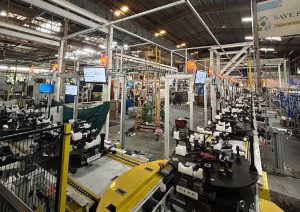
Across the automotive industry and its component and equipment supply chains, production still largely depends on brownfield factories, manual processes and operator expertise.
These production lines represent invested capital, process knowledge, legacy equipment, custom tooling, and years of operational learning.
While these systems continue to deliver reliable quality and performance, what they lack is the digital visibility needed to compete in an increasingly data-driven world. The biggest opportunity therefore lies in unlocking the intelligence and value already built into the line you have.
When an existing line is fundamentally capable of producing the required product, replacing it simply to achieve greater digital capability can lead to unnecessary expenditure and disruption.
In developing and enhancing assembly systems for our customers, Jendamark has learned the benefits of a digital-first strategy, using digital intelligence to identify where investment in hardware is genuinely required – and where the existing asset can be made smarter instead.
We often recommend preserving the productive asset and investing selectively in the digital layer that improves how it performs.
This is not an argument against new equipment but rather for making the investment decision based on the actual performance gap. Taking this approach delivers:
Of course, continuing to use a productive asset without adding a digital layer has its own hidden costs:
The answer is to introduce digital capability in a way that works with the factory’s existing reality – rather than requiring it to become something else before digital transformation can begin.
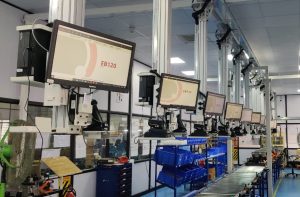
It was after recognising our customers’ need for a cost-effective, minimally disruptive digital solution that Jendamark developed our ODIN Workstation operating system for enforced assembly on production lines.
As a machine builder and automation company, our teams are at home on brownfield and legacy lines, so for us it was the logical next step to be able to make the necessary changes, add hardware to create visibility, make new network connections and program existing machines. This is something that software-only providers are hesitant to do, while for us it was a natural extension of our offering to customers.
The simple idea behind ODIN Workstation is that you can implement a realistic roll-out plan by starting with a single station and scaling from there:
This lets transformation happen incrementally without a major factory overhaul or unnecessary risk.
See a real-world example of how Jendamark’s operating system for enforced assembly helped Electra EV achieve zero quality complaints and an 80% reduction in rework by adding a digital layer on top of its brownfield e-axle assembly line in this case study.
The reality is that the future of manufacturing will be shaped not only by new smart factories, but by the thousands of existing facilities that continue to drive global production.
Before investing in replacement assets, ask a simple question: How much more value can we unlock from what we already have? Talk to our team about digital solutions for your legacy line here.