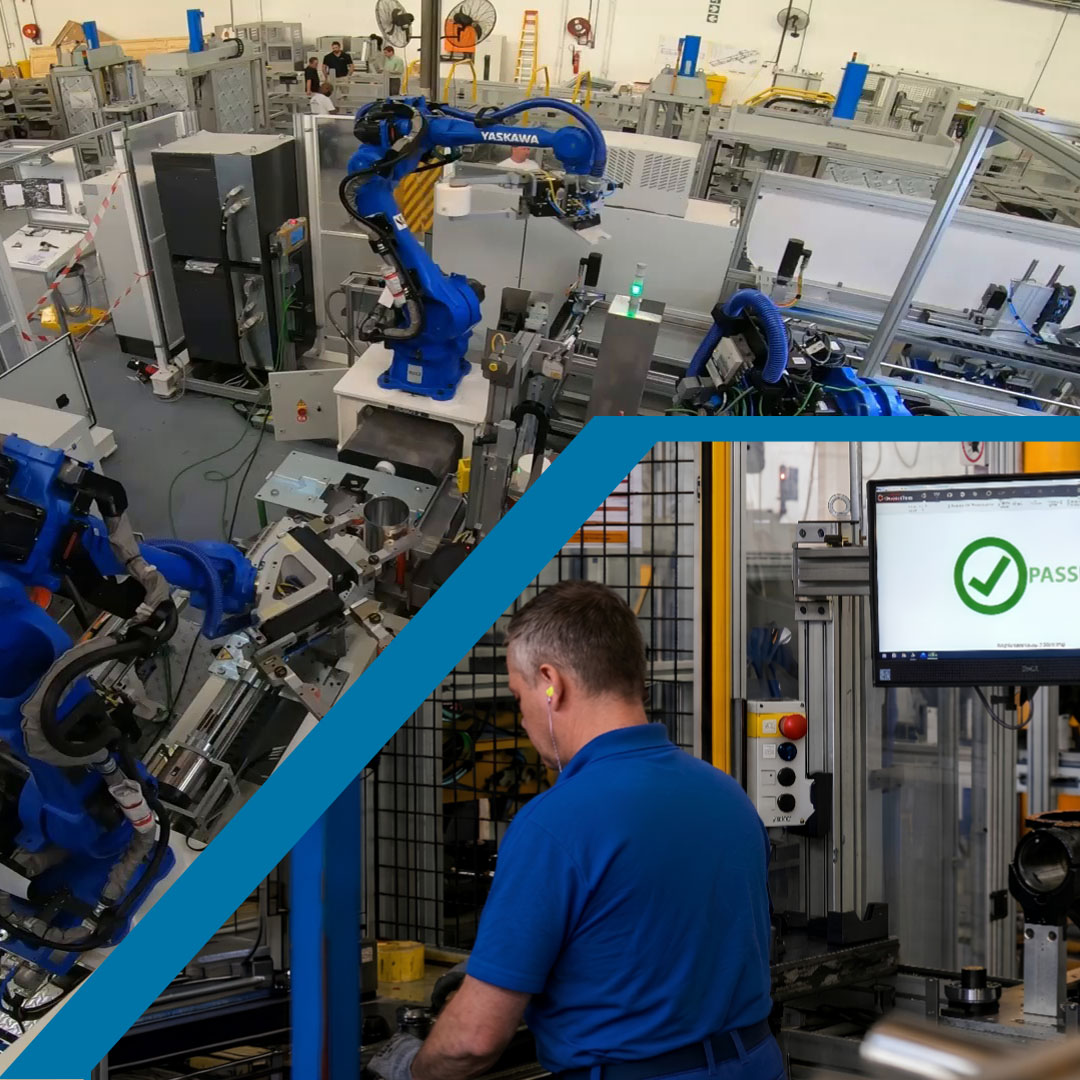
For anyone building EV battery packs, the important point is that a QR code and a battery passport are not just a sticker and a website. They are the visible end of a traceability chain that has to be built into the assembly line itself. A battery cannot carry data that the line never captured. This article explains what the regulation requires, what it means on the production line, and how to prepare a battery line so that compliance becomes a by-product of good manufacturing rather than a scramble before the deadline.
What the EU Battery Regulation requires
The regulation covers many things, from recycled content targets to carbon footprint declarations. Three obligations matter most for the assembly line: physical labelling and marking, the QR code, and the digital battery passport.
The QR code
From 18 February 2027, all batteries on the EU market must carry a QR code. This is a single date across every battery type. The QR code must be printed or engraved on the battery, and where that is not possible it can be placed on the packaging or the accompanying documents.
What the QR code links to depends on the battery. For EV batteries, industrial batteries above 2 kWh and light means of transport (LMT) batteries, it links to the digital battery passport. For other batteries, such as portable and general-use cells, it links to labelling information, the EU declaration of conformity and waste-management information.
The digital battery passport
Also from 18 February 2027, EV, industrial (above 2 kWh) and LMT batteries must have a digital battery passport, reached through the QR code. The passport is an electronic record tied to the individual battery. In its first version, it holds battery identification, type and model, and key technical characteristics, along with data such as carbon footprint and information for recyclers. Later delegated acts may add lifecycle and durability data.
Who is in scope
The passport requirement applies to each individual EV battery, LMT battery and industrial battery above 2 kWh placed on the market or put into service in the EU. Manufacturers and importers carry the obligation. A manufacturer outside the EU that sells batteries into the EU is still in scope.
A parallel push in the United States
Europe is the most prescriptive market on battery data, but it is not the only one tightening up. In the United States, the One Big Beautiful Bill Act has sharpened the domestic content conditions attached to battery incentives. It does not ban imported cells or packs, but to qualify for the available tax credits and to count as domestically produced, the substantive manufacturing work, including cell welding and pack assembly, needs to happen in the US.
The practical effect is similar to the European one, by a different route. A manufacturer claiming a credit has to be able to show where and how a battery was built, which raises the bar on quality records and traceability in US plants as well. A line designed to produce a European battery passport is, by and large, a line that can also answer the American question.
Key dates
The regulation phases in over several years. These are the dates that shape a battery line. The EU’s official summary of the Batteries Regulation sets out the full timetable.
| Requirement | Applies from |
|---|---|
| Separate-collection symbol (crossed-out wheeled bin) | 18 August 2025 |
| General information label, capacity label, non-rechargeable indication | 18 August 2026, or 18 months after the harmonised labelling implementing act enters into force, whichever is later |
| QR code on all batteries | 18 February 2027 |
| Digital battery passport (EV, LMT, industrial above 2 kWh) | 18 February 2027 |
| Supply chain due diligence obligations | 18 August 2027 |

What this means on the assembly line
A battery passport is only as good as the data behind it, and most of that data is created on the assembly line. Meeting the regulation is therefore less about the QR code itself and more about capturing, storing and linking the right information as each battery is built.
Marking
Every battery needs a unique identifier for the QR code to point to. On the line, this means applying a durable marking, printed or engraved, that lasts the life of the battery, then reading it back reliably at each station so that the data captured there is attached to the right battery. Marking that rubs off, or that a scanner cannot read, breaks the chain.
Data capture at every station
The passport draws on data generated throughout assembly. That includes the cell grades and batch numbers used, weld and joint quality records, torque results on bolted joints, sealant and thermal material application, and end of line test results. If a station does not record its result against the battery’s identifier, that information cannot appear in the passport later.
Where traceability usually breaks
The automated parts of a battery line are the easy part. A welder, a dispensing cell or a test rig already produces a result, and all the line has to do is write it against the right serial number. The gaps appear at the manual stations.
Battery assembly is an odd mix of the highly automated and the entirely manual. Cell welding and packing are often fully automatic, while pairing or packaging cells, and loading and unloading the machines, are done by people. Those steps are easy to overlook when a data model is drawn up, and they are exactly the steps that will be missing from the record when someone goes looking a year later.
The answer is to treat a manual station as a station, not as a gap between machines. Guided assembly software prompts the operator through the sequence, confirms that each step was done and in what order, captures the result of smart tools and scanners, and refuses to pass the unit on until the record is complete. That is what ODIN Workstation does on Jendamark lines: it enforces the build at the point where a person is doing the work, so the manual steps arrive in the traceability record in the same shape as the automated ones.
Serialisation and genealogy
Compliance depends on genealogy: a complete record of which components went into which battery, and what happened to it at each step. This is built by serialising the pack and its major components and tying every process record to those serial numbers. Done well, genealogy does more than satisfy the regulation. It lets a manufacturer trace a field problem back to a specific batch, station or shift. We explored why this matters in Battery traceability: prove how it was built.
The benefit shows up in the field as much as in an audit. Electra EV, an Indian electric vehicle manufacturer, used ODIN Workstation to build full traceability into its assembly process and reached zero quality complaints from its customers, because every unit’s build record could be produced on demand. The Electra EV case study sets out how that was done.
Data storage and access
The passport has to stay accessible for years after the battery is placed on the market, so the underlying data needs a durable, structured home rather than a spreadsheet on someone’s desktop. In practice, the line’s data flows into a manufacturing execution system (MES) or a similar platform, which becomes the source that feeds the passport.
It helps to be clear about which layer does what. The MES holds the record and feeds the passport. Underneath it, the station-level software is what makes sure there is a correct record to hold in the first place, by enforcing the assembly sequence and capturing each result as the work is done. ODIN Workstation sits in that lower layer and feeds the MES above it. Our overview of critical assembly processes covers the traceability solutions that sit behind this.
How to prepare a battery line for compliance
Manufacturers selling into the EU still have time before 18 February 2027, but the work sits in the assembly line, which takes time to specify, build and commission. A practical order of work looks like this:
- Confirm scope and dates. Establish which of your batteries are in scope, which markets they go to, and which dates apply. This is worth confirming with a regulatory specialist, as the detail depends on battery type and market.
- Define the data model. Decide what data the passport needs and, from that, what each station has to record. Work back from the passport to the line, not the other way around.
- Design marking and reading into the line. Choose a durable marking method and make sure every station can read the identifier and write its result against it.
- Build genealogy from the start. Serialise the pack and its major components, and link every process record to those serial numbers.
- Account for the manual stations. Go through the process step by step and ask, at each one, where the record comes from. Anywhere the answer is “the operator remembers”, the line needs guided assembly to capture it.
- Choose where the data lives. Select an MES or data platform that can hold the records for the required period and feed the passport.
- Design new lines with this in mind. Retrofitting traceability into an existing line is harder than building it in. For a new EV battery line, treating the passport as a design input from the start is far cheaper than adding it later.
Frequently asked questions
When does the EU battery passport become mandatory?
The digital battery passport is mandatory from 18 February 2027 for EV batteries, light means of transport batteries, and industrial batteries above 2 kWh placed on the EU market. The QR code that links to it is required on all batteries from the same date.
Which batteries need a QR code under the EU Battery Regulation?
All batteries placed on the EU market need a QR code from 18 February 2027. What the code links to varies. EV, LMT and industrial batteries above 2 kWh link to a digital battery passport, while other batteries link to labelling information, the declaration of conformity and waste-management information.
What is in a digital battery passport?
The first version of the battery passport holds battery identification, type and model, and key technical characteristics, along with data such as carbon footprint and information for recyclers. Later delegated acts may require additional lifecycle and durability data.
Does the EU Battery Regulation apply to manufacturers outside the EU?
Yes. The obligations attach to batteries placed on the EU market. A manufacturer or importer that sells batteries into the EU is in scope, wherever the battery is made.
What does the battery passport mean for the assembly line?
The passport reflects data created during assembly. The line has to mark each battery with a unique identifier, capture process data such as weld, torque and test results against that identifier, and store it in a system that can feed the passport for years afterwards.
Was there an August 2026 deadline for the QR code?
No. The 18 August 2026 date relates to the general information label, and it depends on an implementing act that had not been published by that date. The QR code and the digital battery passport both apply from 18 February 2027.
Do US battery manufacturers face similar traceability requirements?
Not in the same prescriptive form, but the direction is the same. US battery incentives are tied to domestic content conditions, which means a manufacturer claiming them has to be able to show where and how a battery was built. That pushes up the same quality record and traceability requirements that the European passport demands.
Compliance starts on the line
The QR code and the battery passport are the visible face of the EU Battery Regulation, but the real work happens on the assembly line, in the marking, data capture and traceability that make the passport possible. A line built with this in mind treats compliance as a natural output of good manufacturing rather than a hurdle.
Jendamark builds EV battery assembly lines with traceability and data capture designed in. ODIN Workstation enforces the build at each station, including the manual ones, and feeds a complete record up to your MES. Explore our EV assembly solutions, or contact us to talk through traceability for your battery line.